1500+ Jewelry Designs In-StockDetails

1500+ Jewelry Designs In-StockDetails
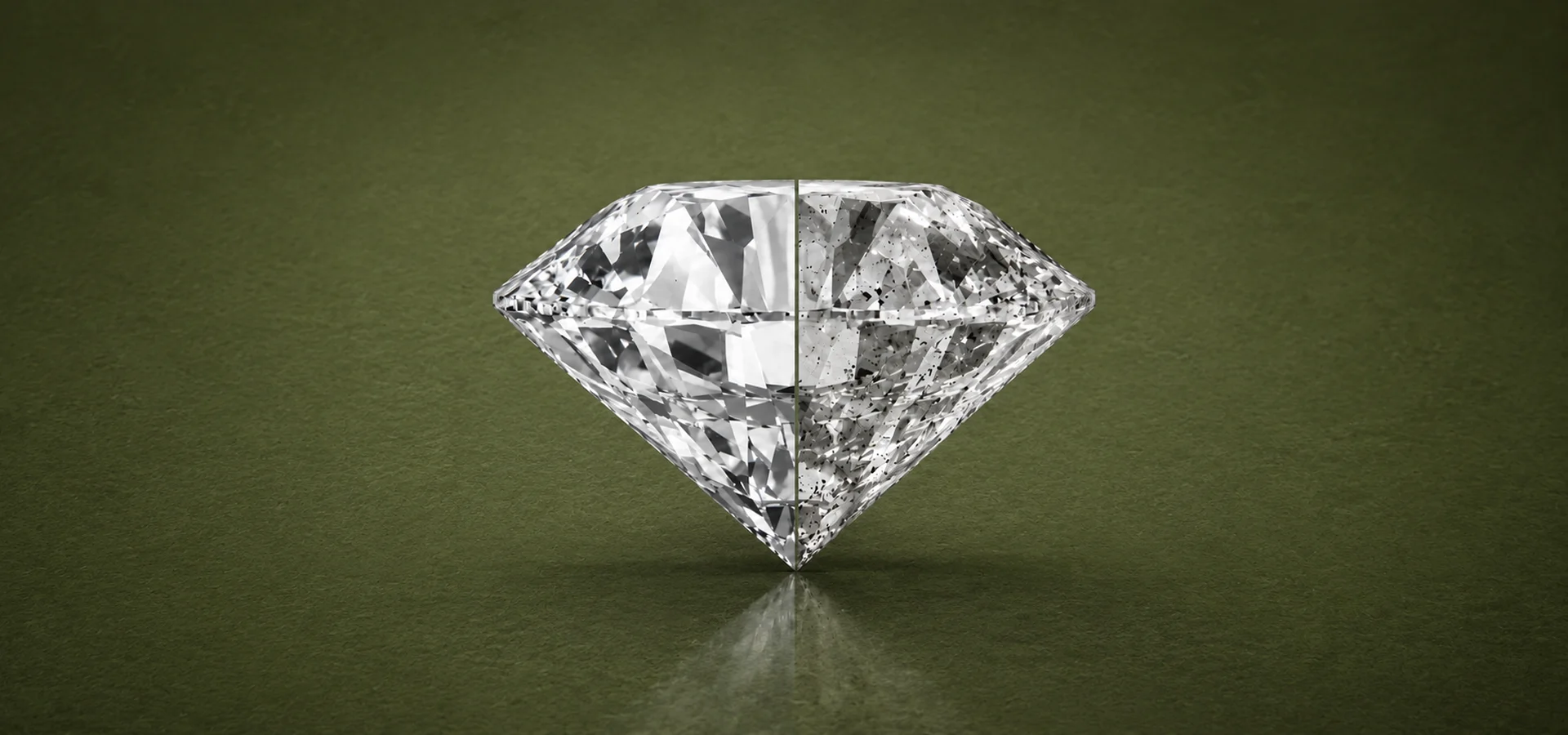
At Diamond Forest, clarity is part of quiet luxury. Before choosing a jewel, it helps to understand the difference between a lab-grown diamond and moissanite. Both can sparkle, but they are not the same gemstone. This is a clear guide to understanding what your jewelry truly holds.
| Point of Difference | Lab-Grown Diamond | Moissanite |
|---|---|---|
| Stone identity | A lab-grown diamond; not mined, but diamond in composition and essential properties | A separate gemstone, commonly lab-created, and often used as a diamond alternative. |
| Composition | Crystallized carbon. | Silicon carbide. |
| Optical look | Classic diamond brilliance with balanced white light, fire, and scintillation | Stronger rainbow fire and more colorful flashes because it bends light differently. |
| Durability | 10 on the Mohs hardness scale. | About 9.25 on the Mohs hardness scale. |
| Creation | Grown through advanced methods such as HPHT or CVD. | Usually created in a lab because natural moissanite is extremely rare. |
| Grading / reports | May be accompanied by a laboratory report or quality assessment; the report format depends on the issuing laboratory. | Usually described by size, color appearance, clarity appearance, and quality category; it is not graded as a diamond. |
| Price position | Generally more accessible than mined diamonds, but priced as a diamond. | Usually lower in price because it is not a diamond. |
| Best for | Those who want diamond identity, refined brilliance, and clear quality information. | Those who want vivid rainbow sparkle and a diamond-like look at a lower price point. |